
ABB Powers Allseas Heavy Transport Vessel for Offshore Wind Infrastructure
AutoControl GlobalAutoControl Global August 13, 2026ABB Integrated Control Systems Power Heavy Transport Vessel for Offshore Wind Infrastructure
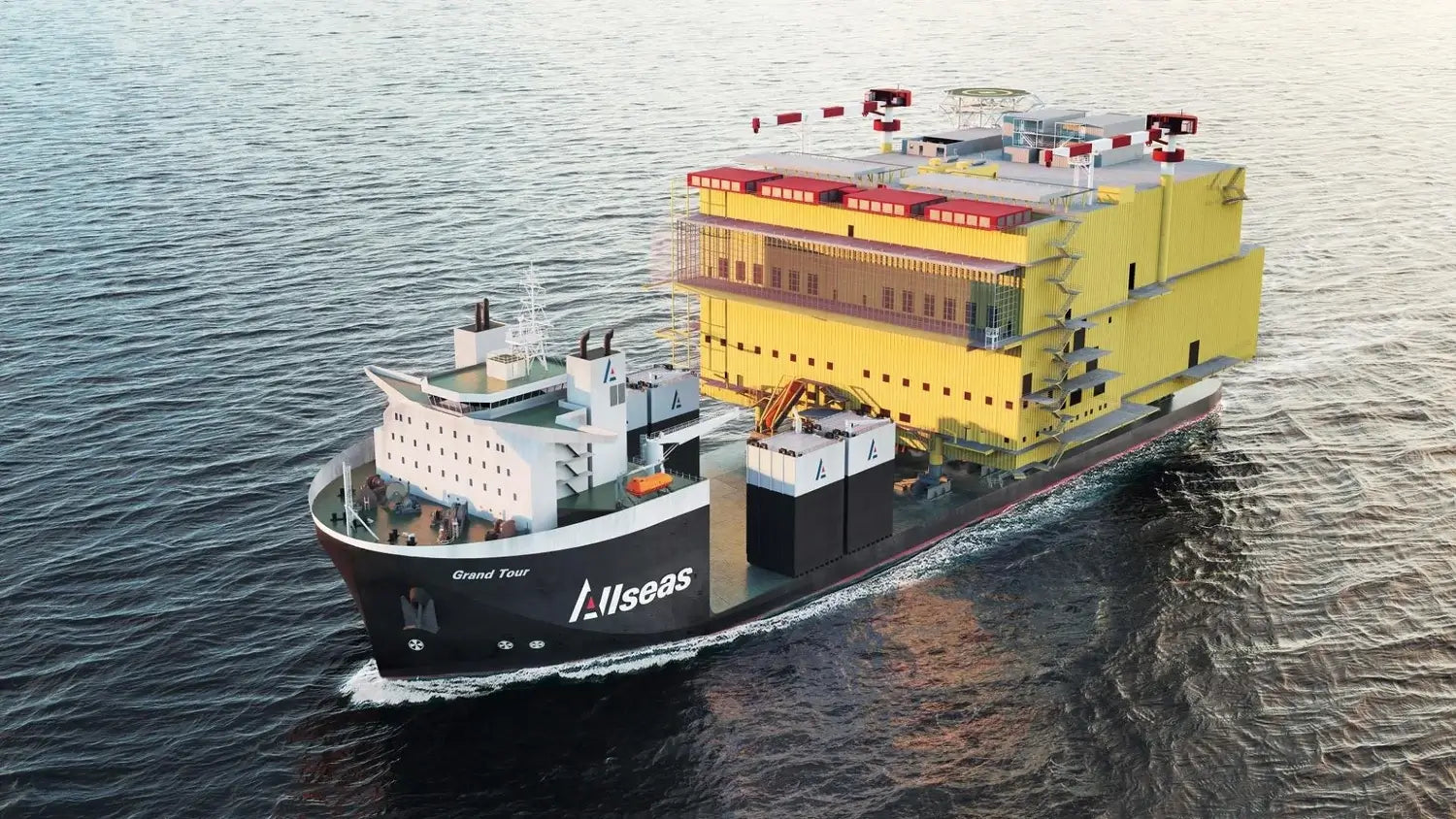
ABB has secured a major contract with Guangzhou Shipyard International (GSI) to supply an integrated power and propulsion system for Allseas' heavy transport vessel, Grand Tour. Scheduled for delivery in 2028, this 230-meter vessel will play a vital role in Europe's offshore wind supply chain. It will transport massive converter stations weighing up to 40,000 metric tons from fabrication yards directly to the installation site.
Industrial Automation Driving Advanced Marine Power Architecture
The vessel relies on ABB's medium-voltage AC power plant configured in a closed ring topology. To ensure maximum operational stability, the setup utilizes the PEMS power and energy management system alongside an Enhanced Power Plant Protection System (EPPS). Similar to advanced factory automation network topologies, this closed ring architecture provides fault tolerance and redundant power distribution during critical semi-submersible operations.
The system topology links the medium-voltage AC power plant directly through closed ring protection lines. Power flows simultaneously to the PEMS module and remote condition monitoring units. Both control channels feed real-time speed and torque commands directly down to the four 3.5MW Azipod propulsion units handling dynamic positioning.
In heavy maritime operations, power management functions similarly to plant-wide DCS architectures. Automation controllers distribute real-time electrical load based on dynamic positioning demands. Consequently, the vessel maintains steady generator performance while ballasting its deck below the waterline.
Gearless Thruster Integration and Precise Dynamic Positioning
ABB will deliver four 3.5MW nozzled Azipod propulsion units capable of 360-degree rotation. These gearless electric thrusters eliminate mechanical gear losses, reducing overall fuel consumption and operating emissions. Furthermore, the gearless design minimizes lubrication requirements, cutting routine maintenance overhead for marine engineers.
Dynamic positioning systems require high-torque, fast-responding control loops to counteract ocean currents. Azipod units deliver immediate thrust adjustment through variable-speed AC drives. As a result, Grand Tour can execute precise maneuvering when aligning alongside Allseas' flagship installation vessel, Pioneering Spirit.
Authoritative Perspective on Marine Control Systems Convergence
From an industrial automation perspective, the integration of propulsion, power management, and remote diagnostics represents a growing trend in marine engineering. Modern vessels increasingly adopt PLC and DCS technology originally developed for land-based processing plants.
Automation engineers recognize that unified control networks significantly improve operational safety during high-risk loading procedures. By integrating condition monitoring directly into the main control bus, operators can detect mechanical degradation before equipment failure occurs. Therefore, digitalized vessel management ensures high availability for critical offshore logistics.
Real-World Solution Scenario: High-Precision Offshore Substation Transfer
Consider an offshore installation scenario where Grand Tour must transfer a 40,000-ton converter station to the Pioneering Spirit in open sea conditions. Traditional mechanical tugs and thrusters struggle to maintain millimeter-level positioning against changing swell patterns.
By deploying ABB's integrated automation suite, the DP system communicates directly with the PEMS module. If a sudden surge occurs, the control network instantly recalculates thrust vectors and adjusts the 3.5MW Azipod outputs without tripping the generator bus. Consequently, the vessel maintains absolute spatial alignment while submerging its main deck, ensuring a safe transfer without manual throttle intervention.