
AI Predictive Maintenance: Stopping Downtime in Smart Factories
AutoControl GlobalAutoControl Global September 03, 2026AI-Driven Predictive Maintenance: Eliminating Costly Unplanned Downtime in Modern Factories
Unplanned downtime presents an existential financial threat to modern industrial operations. Unexpected equipment failures halt production, destroy operational margins, and introduce severe safety hazards. Fortunately, modern artificial intelligence models combined with Industrial Internet of Things (IIoT) sensors offer a proactive path forward. By integrating predictive analytics with plant-wide control systems, industrial operators can detect mechanical anomalies long before catastrophic failures occur.
Mitigating High Financial Losses in Industrial Automation
System outages cost manufacturing enterprises hundreds of thousands of dollars per operational hour globally. Consequently, leaders are rapidly abandoning reactive maintenance models in favor of predictive analytics. Transitioning to dynamic asset monitoring allows facilities to extend equipment service lives based on actual health metrics. Rather than replacing expensive components on rigid calendar schedules, operators maximize asset longevity while eliminating surprise line stoppages across complex factory automation setups.
Megatrends Accelerating AI Deployment in Control Systems
Three strategic market forces accelerate the adoption of machine learning in modern plant operations. First, companies favor operational expenditure (OpEx) strategies that optimize current assets over massive capital investments (CapEx). Second, critical infrastructure sectors demand continuous, zero-downtime performance to remain competitive. Finally, acute shortages of skilled technicians require automated solutions that can democratize technical expertise across field engineering teams.
Real-Time Condition Monitoring Across DCS and Electrical Networks
Mission-critical environments like data centers, utilities, and healthcare facilities require continuous power reliability. Advanced asset management software monitors high-voltage switchgear, circuit breakers, and transformers in real time. Platforms like ABB Uptime360 and ABB Ability™ Genix APM 360 analyze temperature profiles and vibration signatures to predict equipment degradation. These algorithms interface with underlying DCS frameworks, allowing maintenance teams to schedule planned interventions instead of managing emergency shutdowns.
Empowering Field Technicians with Mobile Generative AI Support
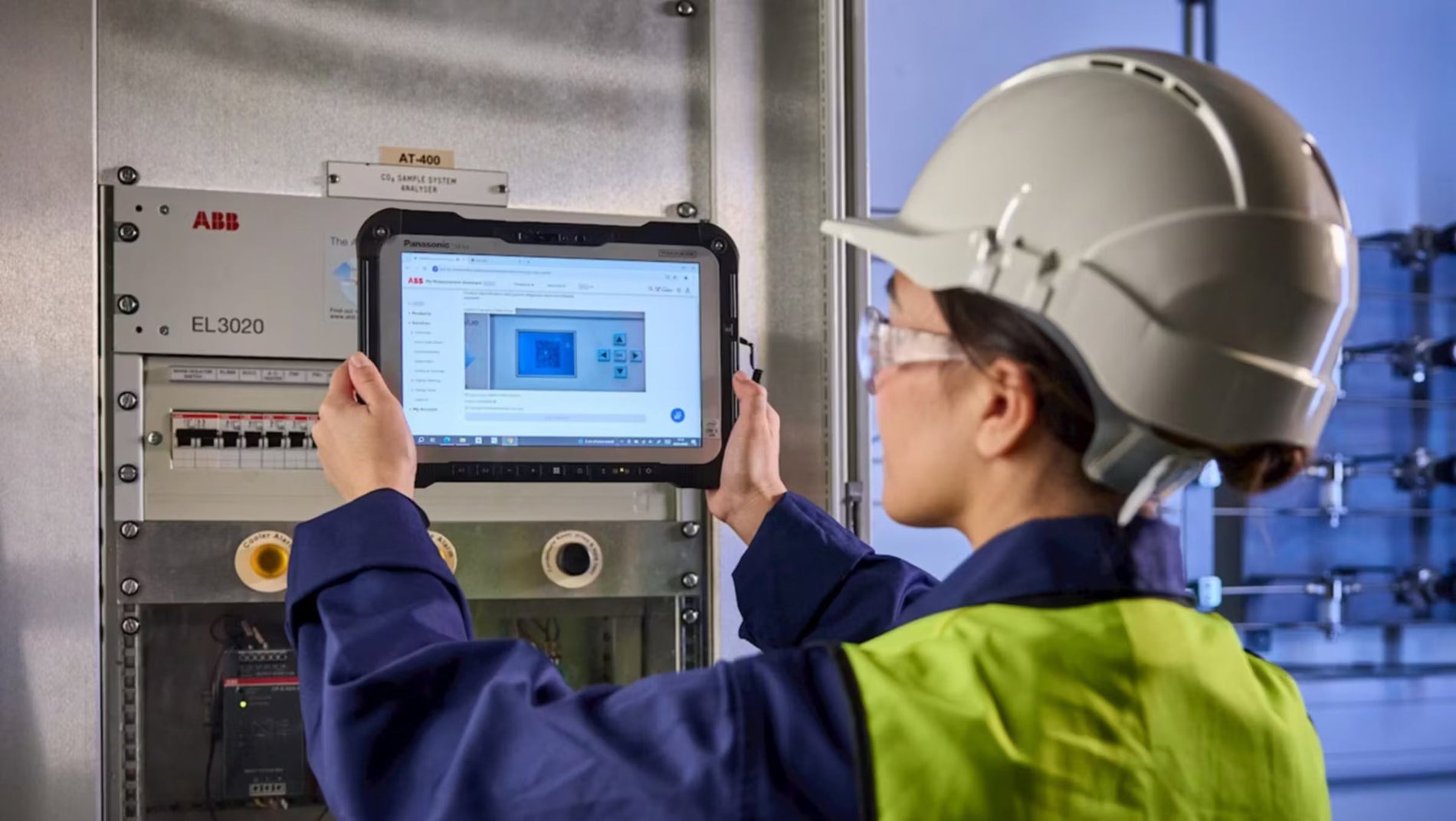
Retiring senior engineers often leave severe technical knowledge gaps in industrial diagnostics. To bridge this skills deficit, plants deploy mobile generative AI assistants like My Measurement Assistant+ on the shop floor. powered by solution architectures like ABB Genix™ Copilot, field technicians instantly access technical manuals, error code translations, and spare parts catalogs. These interactive assistants translate complex diagnostic data, enabling junior staff to lower mean time to repair (MTTR) across multi-vendor PLC environments.
Industry Commentary: The Convergence of Predictive Analytics and Plant Control
The future of industrial automation depends on unifying real-time control hardware with predictive software layers. Traditional programmable logic controllers excel at executing deterministic control loops, yet they lack predictive foresight. Adding algorithmic anomaly detection over standard PLC and DCS networks transforms static monitoring into active fault prevention. Facilities that successfully marry deterministic safety loops with cloud or edge AI models will lead their industries in operational efficiency.
Practical Application Scenario: Vacuum Circuit Breaker Optimization
A Canadian steel manufacturing facility replaced legacy equipment with ABB's VD4-AF1 vacuum arc furnace circuit breaker to eliminate disruptive quarterly maintenance cycles. By leveraging integrated predictive health diagnostics, plant engineers eliminated emergency servicing entirely during the first full year of operation. The intelligent circuit breaker provided continuous operational data to the central control systems, reducing maintenance overhead while maintaining uninterrupted steel production.