
Connected Maintenance Redefines Industrial Automation Standards
AutoControl GlobalAutoControl Global June 01, 2026How Connected Maintenance Redefines Industrial Automation for Growing Businesses
The rapid evolution of factory automation makes keeping equipment running smoothly a top priority. In the past, only manufacturing giants could afford advanced monitoring tools. Today, falling technology costs allow companies of all sizes to adopt smart maintenance strategies. Digital transformation helps businesses boost efficiency, minimize downtime, and achieve long-term sustainability goals.
The Democratization of Digital Factory Automation
Expensive setups and specialist engineering teams once limited the adoption of connected maintenance. High financial barriers prevented smaller enterprises from investing in advanced controllers, sensors, and network infrastructure.
However, modern technology providers are changing the landscape by applying consumer IoT simplicity to the industrial world. Manufacturers now offer intuitive configuration tools and plug-and-play hardware. Therefore, small to medium enterprises can easily modernise their factory automation systems without massive budgets.
Standardized Connectivity Bridges the Legacy Gap
Data connectivity serves as the backbone of modern control systems and predictive maintenance. Historically, fragmented legacy protocols like Modbus and Profibus isolated machine data.
Moreover, the industry has widely shifted toward Ethernet-based communication and standardized protocols like IO-Link. Leading automation brands such as Omron, SICK, and ifm electronic now integrate these standards natively. In addition, open-source industrial edge computing platforms, often built on Raspberry Pi architecture, bridge old PLC systems with modern cloud networks. Consequently, data flows smoothly from individual sensors to plant-wide management platforms.
Predictive Diagnostics Uncover Hidden Equipment Risks
Waiting for a machine to break down compromises productivity and destroys profit margins. Connected sensors and handheld diagnostic tools allow teams to spot mechanical wear before failures happen.
For instance, low-cost handheld vibration meters let technicians quickly screen bearing conditions and drive systems. For continuous monitoring, machine-mounted sensors log data over time to replace rigid, calendar-based service schedules with condition-based action. Similarly, affordable thermal imaging attachments for smartphones let engineers locate overloaded electrical circuits and overheating components safely from a distance.
Oil Analysis Maximizes Fluid Reliability
While digital sensors capture real-time physical shifts, fluid analysis reveals internal machine health. Sadly, many maintenance teams overlook fluid diagnostics despite poor lubrication being a top cause of equipment failure.
Regular oil testing catches internal wear and contamination long before physical symptoms appear. Modern testing kits simplify this process by allowing operators to collect samples and ship them directly to specialized laboratories. For example, the RS laboratory delivers detailed diagnostic reports within three working days. Many businesses choose managed lubrication services to ensure their industrial systems receive the exact fluid volume at ideal intervals.
Author Insight: The Strategic Shift in Industrial ROI
Expert Perspective: True digital transformation in industrial automation is no longer about buying the most expensive hardware. Instead, it focuses on smart data integration. Companies often make the mistake of over-complicating their initial deployments. A practical approach starts by targeting known bottleneck areas with low-cost edge devices and wireless sensors. The cost of ignoring digital maintenance options far outweighs the initial investment required to deploy them.
Real-World Application Scenario
Optimizing a Food Packaging Line
A regional food packaging plant frequently suffered from unexpected failures on its primary conveyor system, which was controlled by an aging PLC setup. The unscheduled downtime halted production and led to spoiled inventory.
- The Solution: The engineering team installed an open-source edge gateway running Node-RED to read data from the legacy PLC. They added plug-and-play IO-Link vibration sensors from ifm electronic onto the main drive motors.
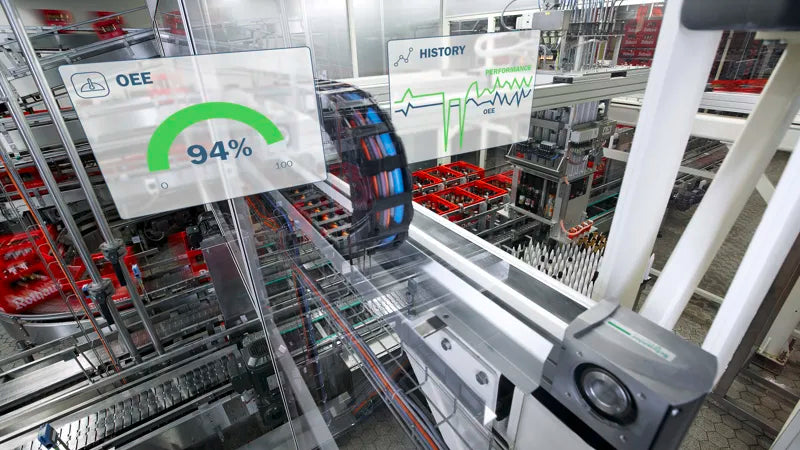
- The Result: Within two weeks, the system detected abnormal vibration patterns in a primary bearing. Technicians scheduled a replacement during a regular cleaning shift. As a result, the company avoided a catastrophic daytime breakdown, saved thousands in potential lost product, and improved its overall equipment effectiveness (OEE).