
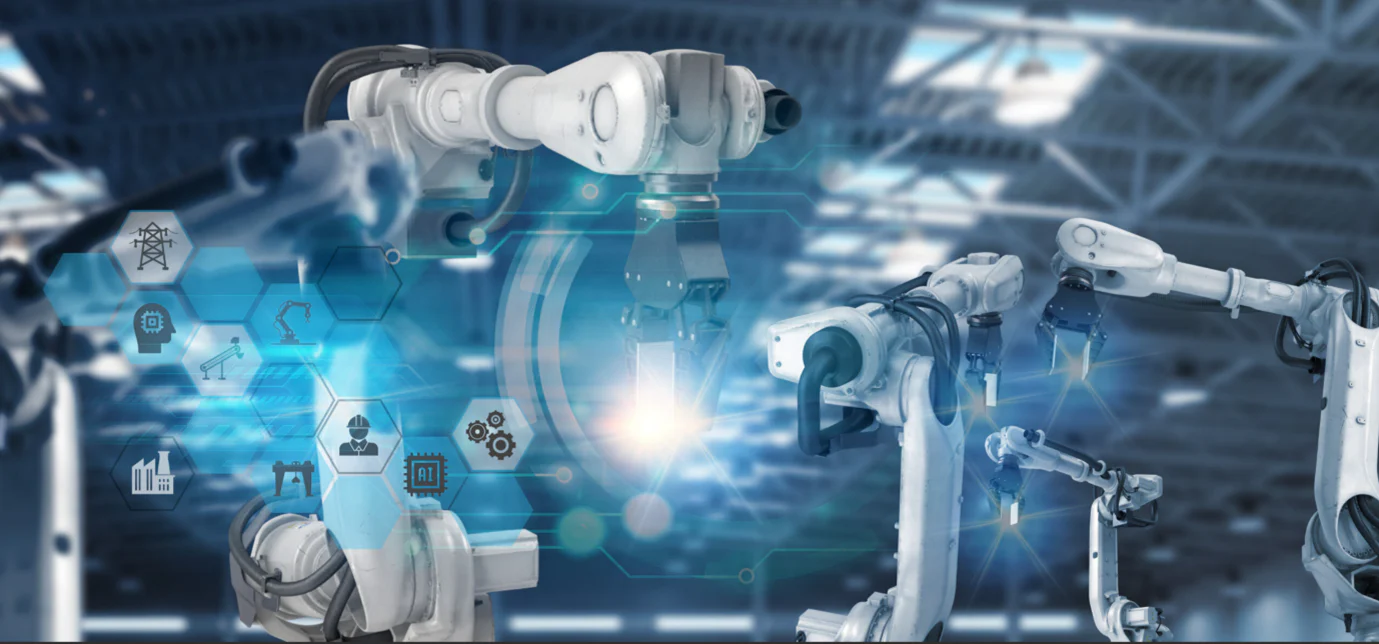
How Vision, Intelligent Sensing & Edge AI Power Smart Factories
AutoControl GlobalAutoControl Global May 21, 2026How Machine Vision, Intelligent Sensing, and Edge AI Power Smart Factories
Manufacturing has reached a pivotal turning point. Global supply-chain volatility, rising energy costs, and critical labor shortages are forcing factories to move beyond conventional automation. Traditional systems rely on rigid, pre-programmed logic that cannot handle real-time operational variables.
The smart factory solves this by creating production environments that sense, interpret, and adapt in real time. This agility relies on three interconnected pillars: machine vision, intelligent sensing, and edge AI. Together, they transform raw data into instant, localized action.
The Limits of Conventional Automation
Traditional factory automation relies heavily on Programmable Logic Controllers (PLCs) and Distributed Control Systems (DCS). These platforms excel at repetitive tasks but operate on reactive logic. When materials vary or tools degrade, traditional systems require manual intervention, causing costly downtime.
Modern factories require cognitive systems to address several growing pressures:
-
High Product Diversity: Mass customization demands rapid, dynamic line changes.
-
Strict Quality Demands: Modern supply chains have zero tolerance for defects.
-
Workforce Shortages: Skilled automation and maintenance engineers are increasingly scarce.
1. Machine Vision: From Inspection to Interpretation
Machine vision provides the optical awareness for the smart factory. Traditional vision systems require fixed lighting and uniform parts, often triggering false alarms when conditions change slightly.
Modern vision systems leverage learning-based techniques to recognize complex patterns. This allows industrial smart cameras to distinguish between acceptable cosmetic variations and true structural defects. Today, machine vision drives core operations across the plant floor:
-
In-Line Quality Assurance: Detecting microscopic assembly and surface flaws at full line speed.
-
Robotic Guidance: Enabling robotic arms to perform precise, variable pick-and-place tasks.
-
Safety Monitoring: Tracking human proximity to hazardous machinery to prevent accidents.
2. Intelligent Sensing: Adding Meaning to Telemetry
While vision provides sight, intelligent sensing monitors the internal health of machinery by tracking parameters like vibration, temperature, magnetic current, and acoustics.
Localized Diagnostics
Modern sensors are no longer passive components that blindly forward raw data to a central server. Increasingly, they feature embedded processing to filter noise and analyze signals locally. Instead of sending raw data streams, a smart sensor transmits actionable status updates, such as warning of an early bearing failure or a mechanical imbalance.
The Power of Sensor Fusion
True operational clarity comes from combining multiple data types. By correlating visual imagery with physical measurements, the system eliminates false alarms. For instance, a slight surface anomaly on a part combined with elevated spindle vibration points to tool wear rather than a raw material defect, allowing for precise maintenance.
3. Edge AI: Intelligence at the Point of Action
Edge AI serves as the localized brain, tying vision and sensing together. By running machine learning models locally on industrial PCs or specialized microprocessors, factories bypass the cloud for time-sensitive decisions.
Edge deployment delivers vital operational benefits:
-
Ultra-Low Latency: Sub-millisecond processing ensures instant response on fast-moving lines.
-
Operational Autonomy: Machinery continues to run safely even during network outages.
-
Data Sovereignty: Local processing protects proprietary manufacturing processes from external exposure.
By deploying intelligence directly to the machine, factories shift from reactive troubleshooting to predictive, self-optimizing performance.
Convergence: Creating a Unified System
The true value of these technologies emerges when they are integrated into a single ecosystem. In a high-mix production environment, machine vision can spot a micro-deviation, intelligent sensors can register a behavioral shift in the hardware, and edge AI can instantly correlate the data.
Instead of scrapping products or halting the line, the system automatically adjusts machine parameters in real time via the DCS. This distributed intelligence simplifies factory architecture, keeps decisions close to the process, and builds a highly resilient, future-ready operation.