
Humanoid Robots in Industrial Automation: The Future of Factories
AutoControl GlobalAutoControl Global July 08, 2026Humanoid Robots in Industrial Automation: The New Frontier for Factories
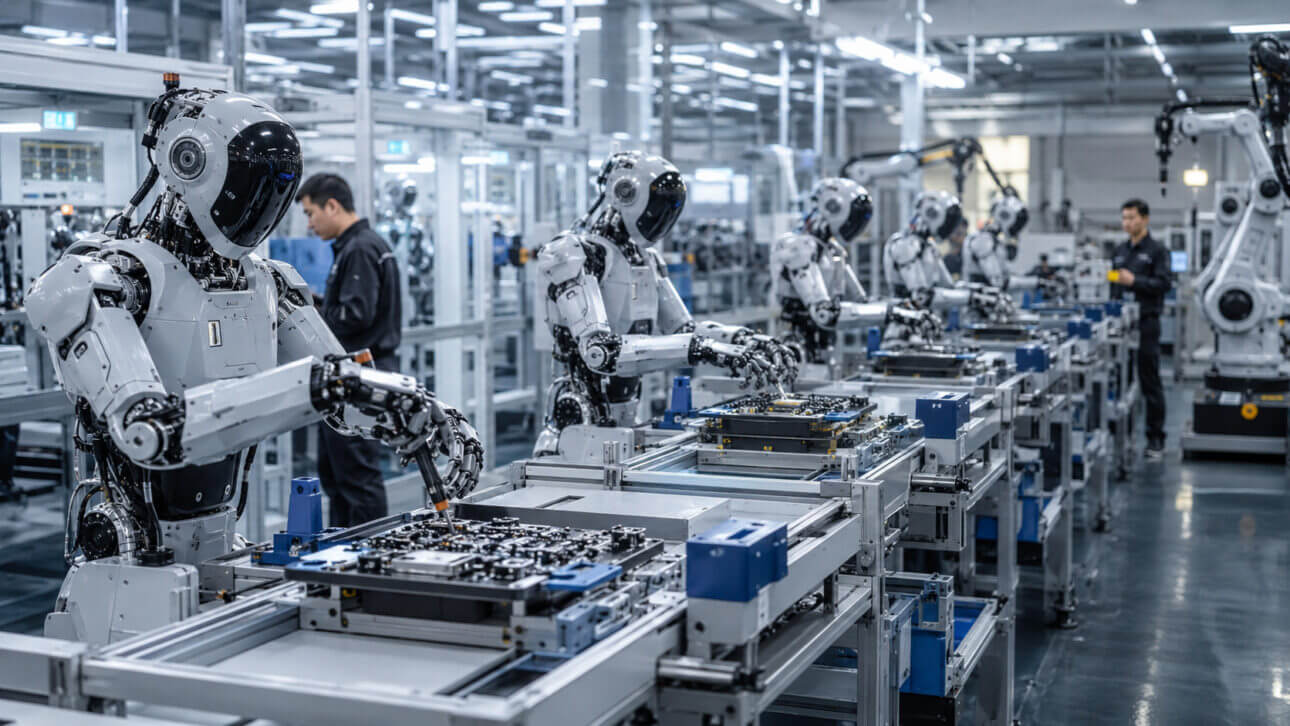
China is rapidly integrating humanoid robots into factory environments to address shrinking labor pools. AgiBot, a prominent manufacturer, recently demonstrated its systems operating continuously for 64 hours. These machines perform repetitive tasks, including component handling and quality inspection. While headlines suggest a total workforce replacement, the reality focuses on augmenting existing factory automation processes.
Addressing Labor Shortages Through Robotics
China faces a declining working-age population, which threatens long-term manufacturing output. Therefore, the government actively invests billions into national industrial modernization strategies. Humanoid platforms represent a significant pillar in this effort to maintain production capacity. By automating mundane tasks, factories can stabilize their throughput despite a smaller human workforce.
The Shift Toward Task-Specific Automation
AgiBot and similar firms do not aim to replace human roles entirely. Instead, they target dangerous, repetitive, or physically grueling activities. These robots handle part transport, machine feeding, and visual inspection duties. As a result, factory automation evolves from rigid, single-purpose hardware toward flexible, human-like mobility. This transition allows human employees to focus on supervisory, maintenance, and programming tasks.
Real-World Performance Metrics
Recent demonstrations at Longcheer Technology highlight the potential of these systems. AgiBot’s units completed over 64,000 tasks during a multi-day test, producing thousands of tablets. The company reported a 99.99% success rate in these controlled electronic assembly flows. However, these figures represent internal testing benchmarks. Industrial integration requires sustained performance across varied, non-standardized production environments.
Overcoming Technical Barriers in Factory Automation
Despite impressive demonstrations, widespread adoption faces significant hurdles. Currently, most humanoid robots operate in highly predictable, controlled environments. Complex tasks requiring high hand dexterity remain difficult to execute with human-like precision. Furthermore, high equipment costs and reliability concerns currently limit deployment. Developers must refine AI-driven manipulation systems to handle diverse objects without constant manual recalibration.
Expert Perspective on Future Deployment
We view this movement as an extension of the existing factory automation hierarchy. Just as PLC and DCS systems manage logical flow, humanoids provide the "mobility layer" for unstructured spaces. We expect the most successful deployments to occur in logistics and electronics, where modular tasks are common. Companies should prioritize integration with existing IT/OT stacks rather than viewing robotics as a standalone solution.
Application Scenarios and Solutions
Integrating humanoid robotics into an existing plant requires a structured approach.
- Scenario: An electronics facility needs to automate material kitting for production lines.
- Solution: Deploy humanoid units to fetch components from storage and feed them directly into automated assembly cells, bypassing the need for extensive conveyor modifications.
- Scenario: A warehouse facility struggles with physical inventory inspection in tight aisles.
- Solution: Use humanoid robots equipped with machine vision to conduct automated cycle counts and visual quality checks, integrating data directly into the facility's management software.