
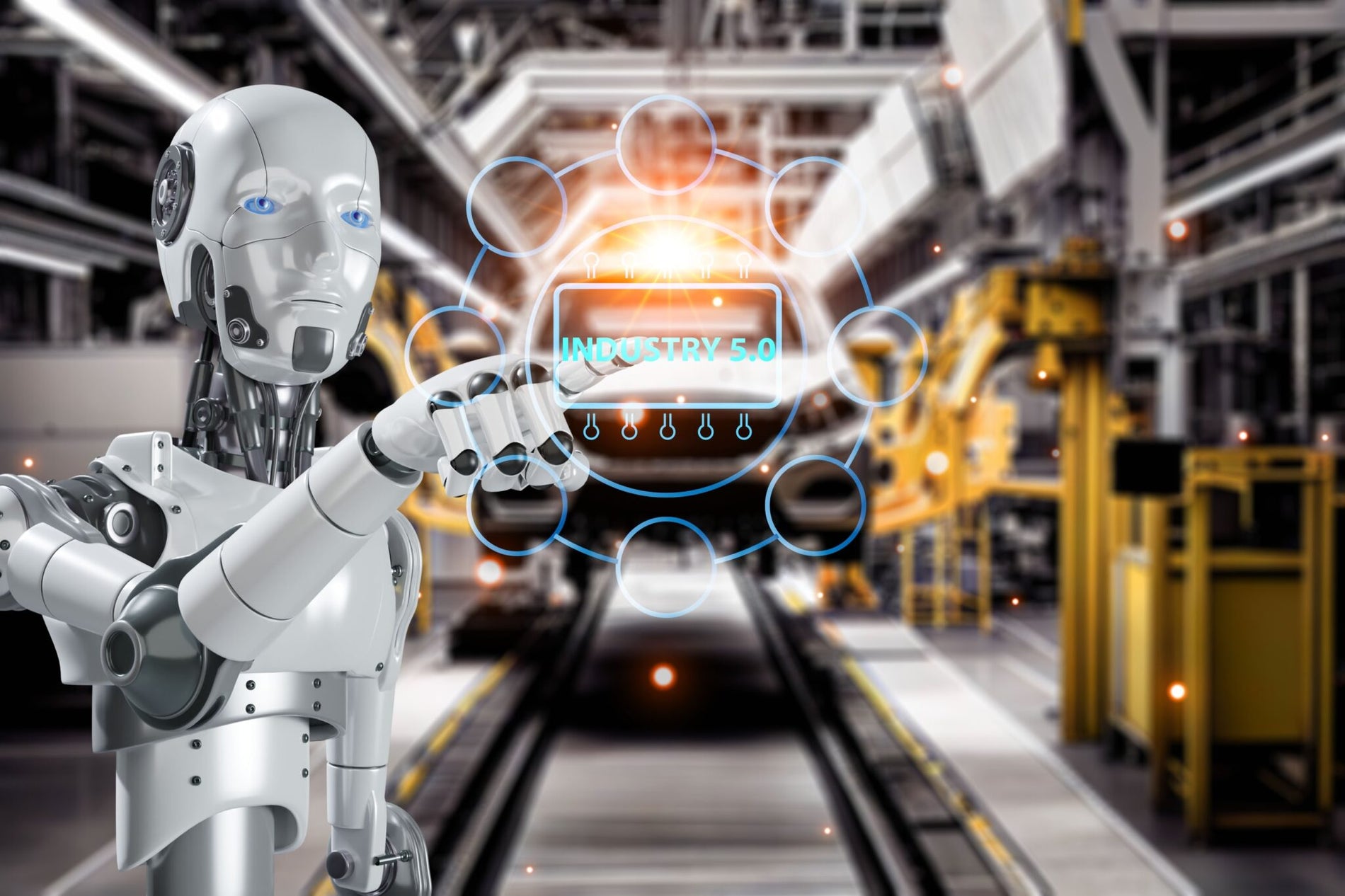
Hyundai’s 25,000 Atlas Robot Rollout Reshapes Factory Automation
AutoControl GlobalAutoControl Global May 27, 2026Hyundai's Giant Leap: How the 25,000 Atlas Robot Rollout Will Reshape Factory Automation
The industrial landscape is on the verge of a massive transformation. Hyundai Motor Group recently announced a groundbreaking plan to deploy 25,000 Atlas humanoid robots across its manufacturing facilities. This massive commitment signals a major shift in how modern automotive leaders approach factory automation. Instead of relying solely on fixed robotic arms, the industry is moving toward flexible, general-purpose machines. Consequently, this initiative propels Boston Dynamics into a highly anticipated commercial era.
Moving Beyond Traditional PLC and Fixed Control Systems
For decades, traditional industrial automation relied heavily on Programmable Logic Controllers (PLCs) and Distributed Control Systems (DCS). These setups excel at managing highly specialized, repetitive tasks within strictly controlled environments. However, modifying these fixed systems for new product lines requires expensive and time-consuming re-engineering.
Humanoid robots offer a completely different approach to factory automation. Because they feature a human-like form, these machines can seamlessly operate within existing facilities built for human workers. Therefore, manufacturers can avoid the massive capital expenditures usually required to redesign entire production lines.
Transforming the Automotive Sector Into a Robotics Laboratory
Automotive assembly lines involve complex challenges that traditional fixed automation cannot easily solve. Tasks like intricate material handling, quality inspections, and dynamic logistics require high adaptability. Hyundai holds a distinct strategic advantage here because it owns Boston Dynamics. As a result, the automaker can test and refine these advanced robots within its own operational network.
This internal feedback loop will significantly accelerate technology iteration cycles. Engineers can identify and resolve mechanical failures or workflow bottlenecks immediately. Essentially, Hyundai serves as both the primary customer and the ultimate development laboratory for physical AI.
The Strategic Importance of the Georgia Metaplant Rollout
Hyundai plans to launch the initial Atlas deployment at its Metaplant America facility in Georgia by 2028. This choice is highly strategic. The Metaplant is central to the company’s North American electric vehicle (EV) ambitions.
By integrating humanoid robots into a next-generation EV facility from the start, Hyundai avoids the headaches of retrofitting older plants. Furthermore, Boston Dynamics has completely redesigned Atlas into a fully electric platform. Older hydraulic versions delivered impressive stunts but lacked the reliability needed for continuous factory operations. The new electric Atlas focuses squarely on heavy lifting, precise manipulation, and agile navigation.
Mitigating Supply Chain Risks and Controlling Production Costs
High manufacturing costs remain the biggest hurdle to widespread humanoid robot adoption. Advanced sensors, onboard computing systems, and high-performance actuators are incredibly expensive to produce. To counter this, Hyundai plans to manufacture up to 30,000 Atlas robots annually while building domestic actuator production capacity in the US.
This move represents a classic automotive strategy: vertical integration. By manufacturing more than 300,000 precision actuator units annually, Hyundai directly controls its supply chain costs. Moreover, this strategy addresses global labor shortages and reduces human worker exposure to hazardous environments.
The Rise of Physical AI and the Next Industrial Competition
The rapid evolution of generative AI has set the stage for "Physical AI." This term describes intelligent systems that interact directly with the physical world through advanced control systems. Hyundai is aggressively pursuing this trend through strategic partnerships with tech giants like Nvidia and Google DeepMind.
Industrial environments are inherently chaotic and unpredictable. To succeed, factory robots must navigate unexpected obstacles, recognize changing objects, and safely cooperate with human workers. Recent breakthroughs in visual processing, simulation training, and multimodal reasoning are finally making this level of autonomy possible.
Author Insight: Balancing AI Hype with Industrial Reality
From a B2B automation perspective, Hyundai’s ambitious timeline warrants both excitement and calculated skepticism. History shows that robotics adoption cycles are often slower than initial press releases suggest. Battery longevity, long-term durability, and real-world maintenance costs remain unproven at scale.
However, Hyundai's massive financial commitment sets it apart from typical pilot programs. While competitors run small trials, Hyundai is building a robust supply chain to support mass deployment. If this strategy succeeds, 2028 will mark the moment humanoid robots transitioned from experimental novelty to standard industrial practice.
Application Scenario: Next-Generation EV Assembly Lines
To understand how Atlas fits into modern factory automation, consider this practical deployment scenario on a next-generation EV assembly line:
The Challenge
An automotive plant needs to transport heavy EV battery modules from delivery pallets to the primary chassis assembly station. The path includes narrow walkways, variable thresholds, and areas where human technicians are actively installing interior electronics. Fixed conveyors are too rigid, and traditional Automated Guided Vehicles (AGVs) cannot lift or position the parts precisely.
The Solution
- Logistics Support: An electric Atlas robot navigates to the delivery bay, identifies the correct battery module using machine vision, and lifts it safely.
- Dynamic Navigation: Utilizing real-world Physical AI, the robot walks through the mixed human-machine workspace, safely steering around unexpected obstacles.
- Assembly Assistance: Atlas holds the heavy module precisely in place while human workers secure the fasteners, combining mechanical strength with human dexterity.
- Task Switching: Once the battery task is complete, a central control system reassigns the robot via Wi-Fi to perform visual quality inspections at a different station.