
Industrial Automation and AI: Modernizing Supply Chain Systems
AutoControl GlobalAutoControl Global August 14, 2026Modernizing Supply Chain Operations Through Industrial Automation and AI
Logistics networks currently encounter severe operational strains from surging e-commerce activity and market fluctuations. Traditional manual processes like paper manifests and isolated spreadsheets no longer satisfy strict delivery expectations. Consequently, modern fulfillment centers adopt smart industrial automation, robotics, and cloud-driven control systems to close operational gaps, optimize labor workflows, and elevate overall productivity.
Integrating Artificial Intelligence Across Warehouse Control Systems
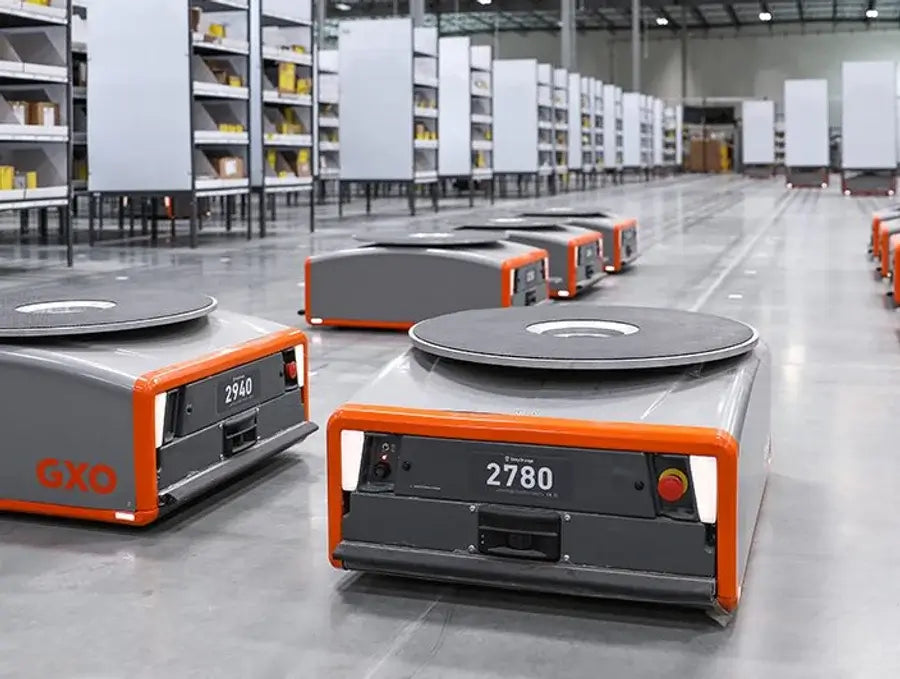
GXO Logistics leads this technological shift by embedding advanced algorithms into its fulfillment services. By integrating proprietary software platforms with warehouse control systems, the organization transforms raw operational metrics into actionable performance insights. Moreover, site-aware machine learning models adapt instantly to local conditions, granting plant managers crystal-clear visibility across every handling stage.
The central GXO IQ AI orchestration layer directly manages both physical execution assets, such as robotic picking arms and humanoids, and digital intelligence functions like demand forecasting. This unified coordination delivers enhanced throughput and real-time traceability across the entire warehouse floor.
Boosting Picking Throughput via Advanced Industrial Robotics
Robotic arms and collaborative robots (cobots) now execute physical material handling tasks side-by-side with warehouse teams. These articulated units carry out repetitive, high-precision actions ranging from automated palletizing to fine product engraving. In consumer manufacturing environments, deploying dedicated AI bots yielded a 50% surge in picking productivity. Furthermore, field trials involving humanoid robots prove their capability in specialized tasks like unloading transport vehicles and picking small cosmetic items.
Strengthening Inventory Forecasting with Predictive Analytics
Predictive software models analyze daily historical demand patterns to anticipate workload variations accurately. Facility leaders leverage these insights to schedule shift personnel efficiently and eliminate operational bottlenecks before they start. In addition, real-time inventory management keeps stock moving smoothly through fulfillment hubs, preventing costly congestion during peak seasonal surges.
Deploying Automated Loading Solutions for Workplace Safety
Achieving fast warehouse throughput requires streamlined perimeter operations. Earlier this year, GXO implemented Europe's first automated loading system for commercial freight vehicles. This automated setup speeds up docking procedures while significantly lowering workplace injury risks. Therefore, integrating dockside automation reinforces both overall site throughput and technician safety standards.
Driving Next-Generation Factory Automation via Edge Vision
Leading logistics providers regularly test edge devices to refine order processing accuracy. Field pilots featuring smart scanning gloves and wearable vision tech provide real-time inventory updates directly to line workers. Consequently, operators confirm part numbers instantly without interrupting physical handling flows, which dramatically cuts processing times and minimizes order errors.
Industrial Automation Application Scenario: E-Commerce Fulfillment Center
- Challenge: High order error rates and severe throughput bottlenecks during peak holiday demand.
- Solution: Integration of an AI orchestration platform with articulated robotic arms and wearable smart scanners.
- Execution: AI algorithms analyze order streams in real time and route tasks directly to cobots. Human operators wear vision-assisted smart scanners to confirm stock selection seamlessly.
- Results: Order picking accuracy reaches 99.8%, manual handling times decrease by 35%, and picking productivity jumps by 50%.
Industry Insights: Strategic Value of Robotics in Modern Logistics
Expert Commentary: Integrating physical robotics with centralized software architectures marks a fundamental shift in modern supply chain management. While early warehouse automation relied on rigid, single-purpose conveyor belts, today's flexible robotic platforms adapt dynamically to changing product shapes and shifting order volumes. Modern logistics leaders realize that combining physical automation with predictive AI algorithms creates resilient facilities capable of absorbing sudden market disruptions with minimal operational downtime.