
Seeing Machines Expands Human-Centred AI into Industrial Robotics
AutoControl GlobalAutoControl Global August 13, 2026Seeing Machines Advances Factory Automation with Human-Centred AI in Industrial Robotics
Seeing Machines (LSE:SEE) has signed an advanced development contract with a global industrial technology enterprise. This agreement marks a strategic milestone for the company. It extends its proprietary Human-Centred AI capabilities into industrial robotics and factory automation. Previously, Seeing Machines focused primarily on transport safety systems across automotive, fleet, off-road, and aviation sectors.
Bridging Transport Safety and Factory Automation
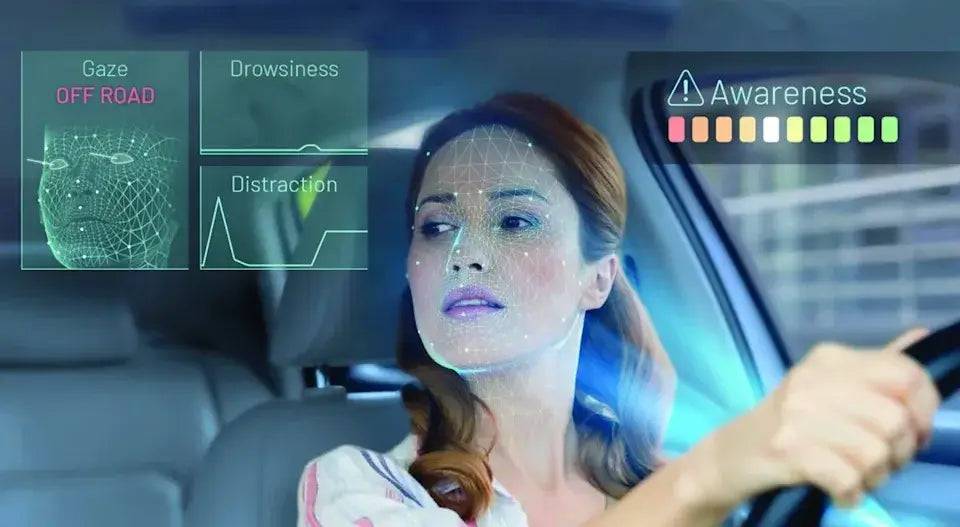
The project focuses on building a proof-of-concept system for manufacturing environments. Engineers will integrate the company's Perception Map technology into industrial robotics. Consequently, automated machinery can better interpret human operator presence and cognitive states.
Industrial automation relies heavily on programmable logic controllers (PLC) and distributed control systems (DCS). However, conventional control systems lack intuitive human-sensing capabilities. By embedding advanced computer vision, Seeing Machines creates a safer collaborative work environment. This integration improves human-robot interaction in safety-critical manufacturing zones.
Strategic Market Expansion Beyond Automotive Applications
This agreement establishes a foundation for broader collaboration in factory automation. Expanding into industrial robotics allows Seeing Machines to diversify its commercial portfolio. Moreover, the company leverages existing intellectual property without distracting from its core transport business.
In modern manufacturing, safety instrumented systems (SIS) protect operators from hazardous machinery. Integrating real-time human tracking into control systems allows machinery to anticipate human error. As a result, automated lines can adjust operations dynamically before safety hazards occur.
Investment Perspective and Growth Trajectory
For investors, this contract signals a meaningful expansion of the addressable market for Seeing Machines. Entering factory automation opens revenue opportunities across new industrial customer bases. However, the announcement omits specific financial terms, expected revenues, and commercial timeline commitments.
The immediate value of this contract lies in technical validation rather than immediate financial returns. The broader commercial impact depends on transitioning this proof-of-concept into large-scale deployment. Furthermore, Seeing Machines continues to deliver revenue growth despite negative operating cash flow and ongoing net losses. Technical indicators show supportive stock momentum above major moving averages. However, long-term valuation depends heavily on achieving sustainable profitability.
Technical Insights into Human-Centred Perception Technology
Seeing Machines utilizes more than 25 years of human factors research to build its AI models. Its platform combines optical sensors, embedded edge processing, and computer vision algorithms.
The signal flow begins with optical sensors and vision hardware capturing real-time visual data. Embedded edge processing units process these raw visual inputs directly at the device layer. Next, the Perception Map and Human Factors AI algorithms analyze operator focus, fatigue, and trajectory. Finally, the system transmits deterministic control parameters directly into the factory automation and PLC or DCS logic.
When integrated into factory automation frameworks, the system tracks worker attention, fatigue, and physical proximity continuously. Standard automation networks receive these perception inputs as deterministic control parameters. Therefore, the control architecture can alter robot velocity or trigger emergency stops automatically.
Real-World Solution Scenario: Safety in Collaborative Workcells
Consider an automated automotive assembly line where human technicians work alongside heavy industrial robots. Traditional safety setups rely on physical fences or basic light curtains to halt operation.
By implementing Seeing Machines' Perception Map technology, the cell monitoring system evaluates worker focus and movement trajectories continuously. If a technician exhibits signs of distraction near an active robotic arm, the system sends an interrupt signal to the safety PLC. The DCS then slows down the robot instead of triggering a hard emergency stop. Consequently, this targeted response prevents costly production downtime while maintaining worker safety.