
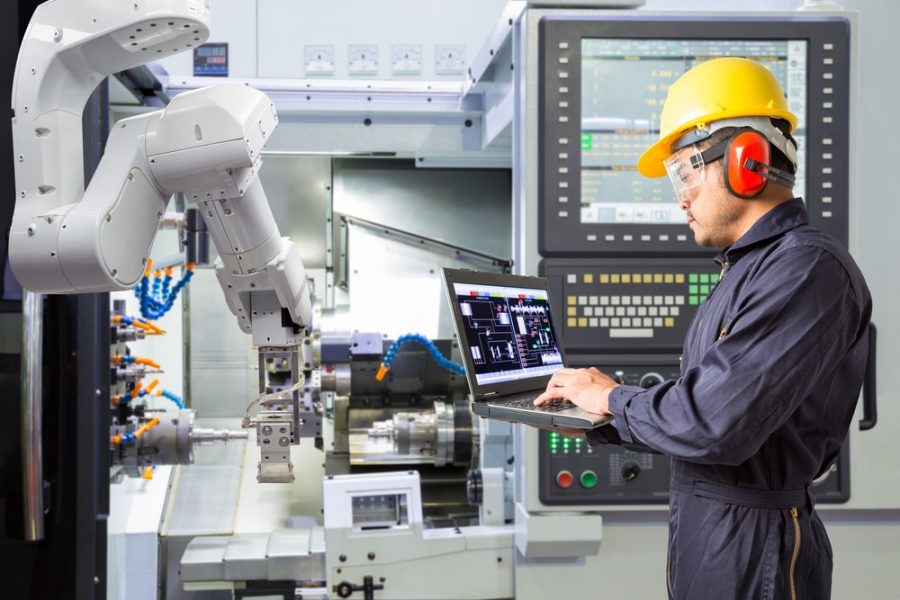
The Human Advantage in 2026: Engineering Value in the Age of Automation
AutoControl GlobalAutoControl Global December 30, 2025The Human Edge in 2026: Why Automation Needs Engineers, Not Replacements
As we move toward 2026, manufacturing, aerospace, and high-precision engineering are undergoing structural change driven by AI, robotics, and automation. From the perspective of an industrial automation engineer, one reality is increasingly clear: technology is advancing rapidly, but it is not diminishing the importance of human expertise. Instead, it is redefining where human value is created.
The companies that will lead in this next phase are not those that automate the most, but those that integrate automation intelligently—aligning advanced systems with skilled people, disciplined processes, and long-term technical vision.
How Automation Is Redefining Work on the Factory Floor
Automation in 2026 is no longer about replacing labor; it is about reallocating human effort to where it matters most. Robots, automated inspection systems, and AI-driven analytics now handle tasks that are repetitive, hazardous, or demand extreme consistency. This shift allows engineers and technicians to focus on system optimization, root-cause analysis, and continuous improvement.
From my experience, the most valuable employees are those who understand both the process and the automation behind it. Engineers who can interpret data trends, fine-tune control strategies, and respond to non-standard failures provide value that no algorithm can fully replicate. Automation raises the baseline—but human judgment determines the outcome.
Workforce Evolution: Skills Over Job Titles
In advanced manufacturing and aerospace, rigid job definitions are giving way to skill-based roles. The future workforce is built around adaptability. Engineers, technicians, and operators increasingly collaborate across mechanical, electrical, and digital domains.
High-precision environments—such as aerospace manufacturing or rapid prototyping—require people who can test assumptions, validate results, and make decisions under uncertainty. Machines execute instructions, but humans define priorities, assess risk, and determine when “good enough” is not acceptable. Organizations that invest in cross-disciplinary training and hands-on experimentation will consistently outperform those that rely on static role structures.
Why Human Oversight Remains Critical in Safety-Critical Industries
In aerospace and other safety-driven sectors, automation enhances reliability, but accountability remains human. Control systems can detect anomalies, but experienced engineers determine whether to shut down a process, reconfigure a system, or continue operation safely.
No AI system fully understands context, regulatory responsibility, or long-term consequences. Human oversight ensures that safety, compliance, and engineering ethics are maintained—especially when systems behave in unexpected ways. In 2026, the most trusted organizations will be those that combine automated consistency with expert human supervision.
Regulation, Trade, and System Design in a Volatile Global Landscape
Regulatory frameworks, export controls, and shifting trade policies continue to shape how automation systems are designed and deployed. Engineers can no longer treat compliance as an afterthought—it must be embedded into system architecture from the start.
From an automation standpoint, resilient system design means modularity, traceability, and documentation. Companies that proactively track regulatory trends and design flexible architectures will adapt faster to change, reduce risk, and avoid costly redesigns. Strategic foresight is becoming as important as technical accuracy.
AI and Automation as Force Multipliers, Not Decision Makers
AI-driven tools—predictive maintenance, generative design, automated quality inspection—are powerful accelerators. However, they deliver results only when guided by experienced professionals who understand process physics, failure modes, and operational trade-offs.
In practice, AI excels at pattern recognition and speed, while humans excel at interpretation and prioritization. The strongest results come when engineers are trained to question outputs, validate assumptions, and refine models continuously. In this partnership, productivity and innovation scale together.
Looking Forward: Elevating Engineering Through Thoughtful Adoption
The future of manufacturing and aerospace is not about eliminating the workforce—it is about elevating it. Automation raises capability, but people define direction. Organizations that treat engineers, technicians, and operators as innovators rather than system attendants will unlock faster innovation cycles and more resilient operations.
As an industrial automation engineer, my view is simple: technology should amplify human capability, not replace it. In 2026 and beyond, the competitive advantage belongs to companies that build systems around people who know how to think, adapt, and engineer under real-world constraints.