

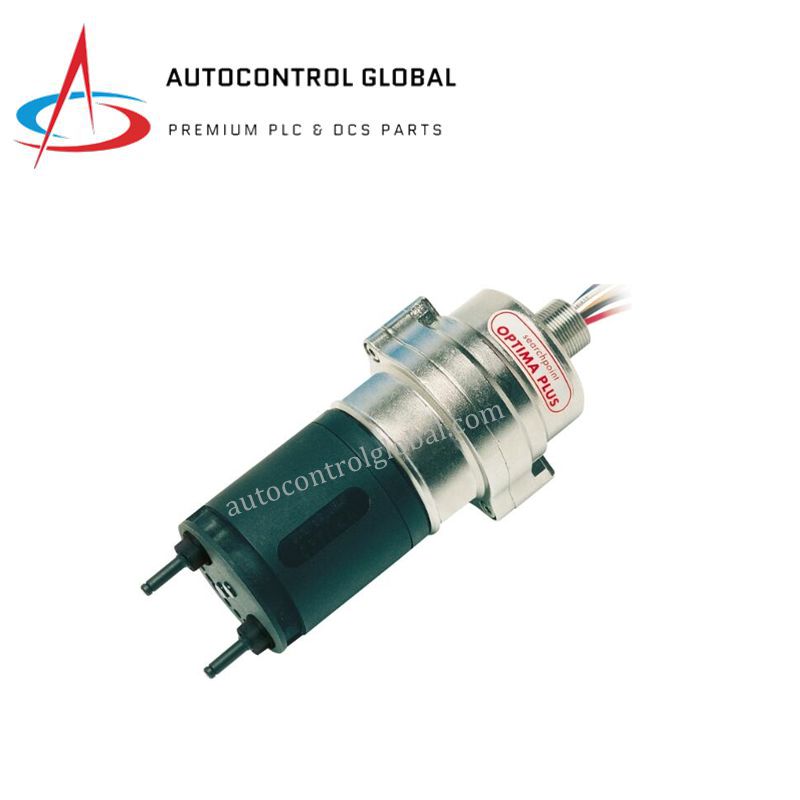
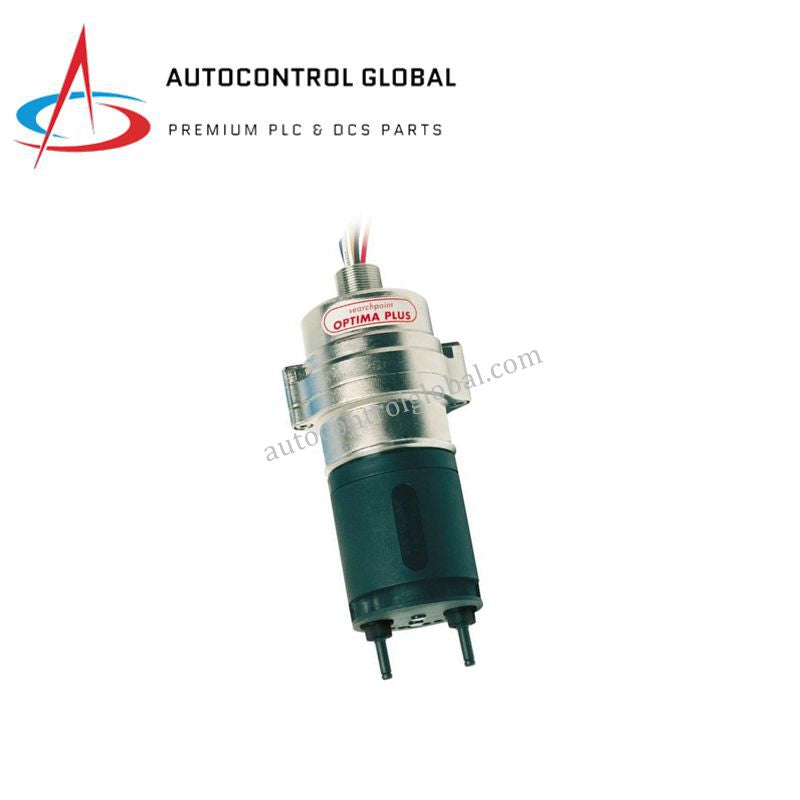


Honeywell 2108B2003N Searchpoint Optima Plus Infrared Gas Detector
Manufacturer: Honeywell
-
Part Number: 2108B2003N
Condition:New with Original Package
Product Type: Gas Detectors
-
Country of Origin: USA
Payment:T/T, Western Union
Shipping port: Xiamen
Warranty: 12 months
Honeywell 2108B2003N Searchpoint Optima Plus Infrared Gas Detector
Configured for ethylene and combustible gas detection in hazardous industrial environments, the Honeywell 2108B2003N (2108B2003N Infrared Gas Detector) provides direct physical/electrical execution. The instrument uses point infrared absorption mechanics to monitor target gas concentrations, generating a proportional analog output signal with an integrated digital communication overlay.
Hardware Specifications
| Parameter | Specification |
|---|---|
| Model | 2108B2003N |
| Brand | Honeywell |
| Origin | USA |
| Weight | 1.2 kg |
| Dimensions | 118 mm x 68 mm x 28 mm |
| Operating Temp | -40 to +70 deg C |
| Power Consumption | 12-24 VDC input; 18-32 VDC typical (Input Current: 7 mA) |
| Detection Method | Infrared absorption |
| Target Gas | Ethylene (supports over 100 gases and vapors) |
| Response Time | T50 < 3 sec, T90 < 4 sec (for methane) |
| Humidity Range | 0-99% RH (non-condensing) |
| Signal Delay | 0.5 microseconds |
| Communication | HART over 4-20 mA output |
| Housing Material | 316 stainless steel |
| Protection Rating | IP66 / IP67 |
| Certifications | ATEX, UL, IECEx, FM, MED |
4-20 mA HART Loop Protocol Integration
The gas detector outputs process variables via a standard 4-20 mA HART loop protocol layer superimposed onto the analog current loop. This framework enables concurrent transmission of the primary gas concentration value alongside digital diagnostics, internal optical fault status, and calibration matrices without disrupting the analog safety signal. The HART frequency-shift keying (FSK) physical layer maintains wave shape integrity over standard twisted-pair instrumentation lines, providing direct connectivity to DCS asset management software.
Frequently Asked Questions
Q: How does the internal optics system handle transient power drops or supply fluctuations?
A: The device accepts a wide input window from 12 to 24 VDC, though standard engineering design requires a typical 18 to 32 VDC supply rail. Internal regulation topologies isolate the infrared source from minor voltage line variations, preventing spurious optical fault triggers or calibration drift.
Q: What is the response latency of the 4-20 mA signaling interface during a gas release event?
A: The hardware architecture features an internal signal delay of 0.5 microseconds, allowing the raw infrared sensor block to register gas shifts rapidly. This results in an execution runtime where the T50 response curve tracks under 3 seconds for ethylene processing.
Field Installation Guidelines
- Mechanical Mounting and Housing Orientation: Fix the 316 stainless steel housing securely to the structural support framework using designated mounting accessories. Position the optical sensor window facing downward or horizontally to prevent the accumulation of moisture, dust, or heavy particulate matter on the mirror surfaces.
- Conduit Sealing and Thread Engagement: Route all power and signal cables through certified explosion-proof conduit entries or cable glands. Ensure a minimum of 5 full threads of engagement on all NPT terminal entries to maintain the flameproof integrity required by ATEX, UL, and IECEx hazard classifications.
- Shield Termination and Loop Grounding: Enclose the 4-20 mA HART loop conductors within a continuous braided shield element. Terminate this shield layer strictly at the single point ground bus located inside the safe-area control cabinet, leaving the field-device end isolated to eliminate ground loop circulating currents.