

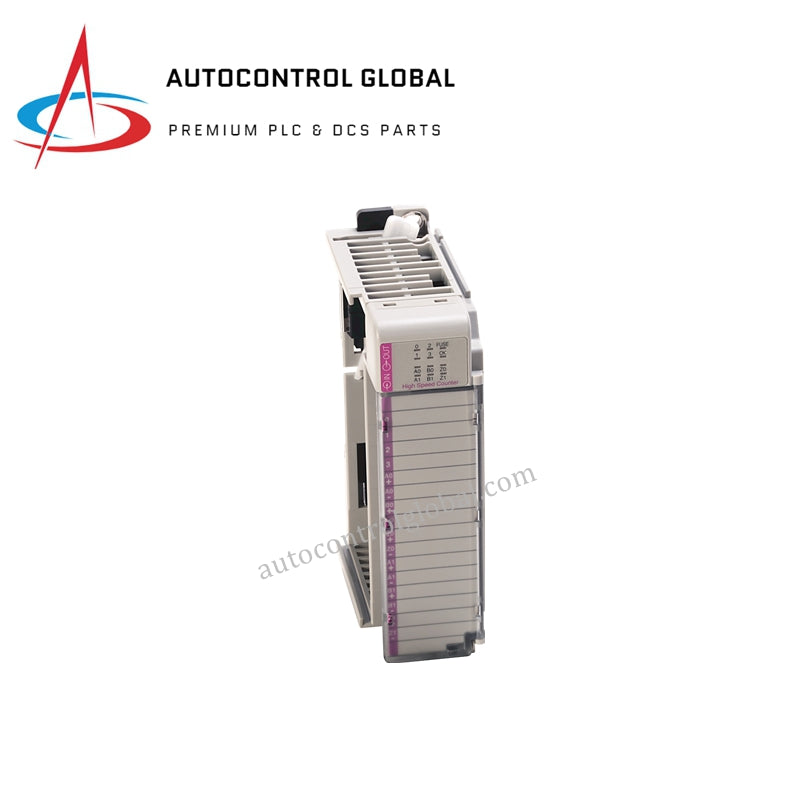


Allen-Bradley 1769-IT6 Thermocouple Input Modules
Manufacturer: Allen Bradley
-
Part Number: 1769-IT6
Condition:New with Original Package
Product Type: Analog Input Modules
-
Country of Origin: USA
Payment:T/T, Western Union
Shipping port: Xiamen
Warranty: 12 months
Allen-Bradley 1769-IT6 Compact I/O Thermocouple Input Module
The Allen-Bradley 1769-IT6, also cataloged as the 1769-IT6 Thermocouple Input Module, operates as a dedicated hardware component for precise temperature measurement within CompactLogix and MicroLogix controller networks. The device routes six analog input channels and two integrated cold junction compensation (CJC) sensors straight into the central processor backplane. An internal sigma delta analog-to-digital converter executes high-resolution data conversion of multiple sensor curves including B, E, J, K, R, S, T, N, and C configurations.
Hardware Specifications
| Parameter | Specification |
|---|---|
| Model | 1769-IT6 |
| Brand | Allen-Bradley |
| Origin | USA |
| Weight | 2 kg |
| Dimensions | 8.7 x 3.5 x 11.8 cm |
| Operating Temp | 0 to 60 deg C |
| Power Consumption | 140 mA at 5 VDC, 30 mA at 24 VDC |
| Module Type | Thermocouple Input Module |
| Hardware Converter Type | Sigma Delta |
| Input Channel Density | 6 channels |
| Cold Junction Hardware | 2 CJC sensors |
| CJC Accuracy | +/-1.0 deg C |
| Non-Linearity Limit | +/-0.03% of full scale |
| Common Mode Voltage Range | +/-10 VDC maximum |
| Rated Working Voltage | 30 VAC / 30 VDC |
| Open-Circuit Sensor Detection | 7 ms to 2.1 s response window |
| Maximum Heat Dissipation | 1.5 W |
| Power Supply Distance Rating | Up to 8 modules from power supply |
| Core Power Adaptability | 1769-PA2, 1769-PB2, 1769-PA4, 1769-PB4 |
| Mechanical Slot Width | 1 slot |
Backplane Bus Communication Velocity and Density Attributes
The hardware connects directly via the local module chassis, allowing efficient I/O density scaling across complex thermal tracking systems. The underlying circuit path leverages local backplane bus communication velocity to push raw converter bits into the system controller registry during every I/O scan loop. Control programmers maintain strict firmware flash compatibility alignments across all adjacent modules to avoid diagnostic execution dropouts. This integrated architecture manages diagnostic faults, such as open-circuit conditions, instantly within software parameters, bypassing common network routing latencies.
Frequently Asked Questions
Q: How does the 1769-IT6 module maintain precision measurements when ambient panel temperatures change?
A: The module relies on two dedicated cold junction compensation (CJC) sensors to dynamically measure environmental changes at the terminal block interface, maintaining accuracy within +/-1.0 deg C.
Q: Can an engineer place this module ten slots away from the system power supply module?
A: No. The physical hardware enforces a strict power supply distance rating of eight modules, meaning technicians must locate the module within eight slots of a valid 1769 power supply unit.
Q: What happens if an external thermocouple wire fractures during active monitoring cycles?
A: The onboard processing architecture initiates open-circuit detection sequences, triggering an input channel fault word within 7 ms to 2.1 s depending on filter choices.
Field Installation Guidelines
Isolate and disconnect all electrical power sources entering the controller assembly before attempting hardware insertion. Slide the 1769-IT6 module into place next to the preceding system component, making sure that the interlocking tongue-and-groove side tracks match up perfectly. Lock the integrated bus latches firmly by sliding the red mechanical tabs inward to connect the internal backplane bus bridge. Connect the specified thermocouple extension wiring to the terminal block, matching positive and negative poles exactly to prevent inverted voltage measurements. Ground all external signal wire shields exclusively at the designated enclosure earth terminal block to protect low-level millivolt signals from inductive electrical noise.