


KJ3001X1-BB1 Emerson 8-Channel DI Dry Contact Card | New Stock
Manufacturer: Emerson
-
Part Number: KJ3001X1-BB1
Condition:New with Original Package
Product Type: Digital I/O Cards
-
Country of Origin: USA
Payment:T/T, Western Union
Shipping port: Xiamen
Warranty: 12 months
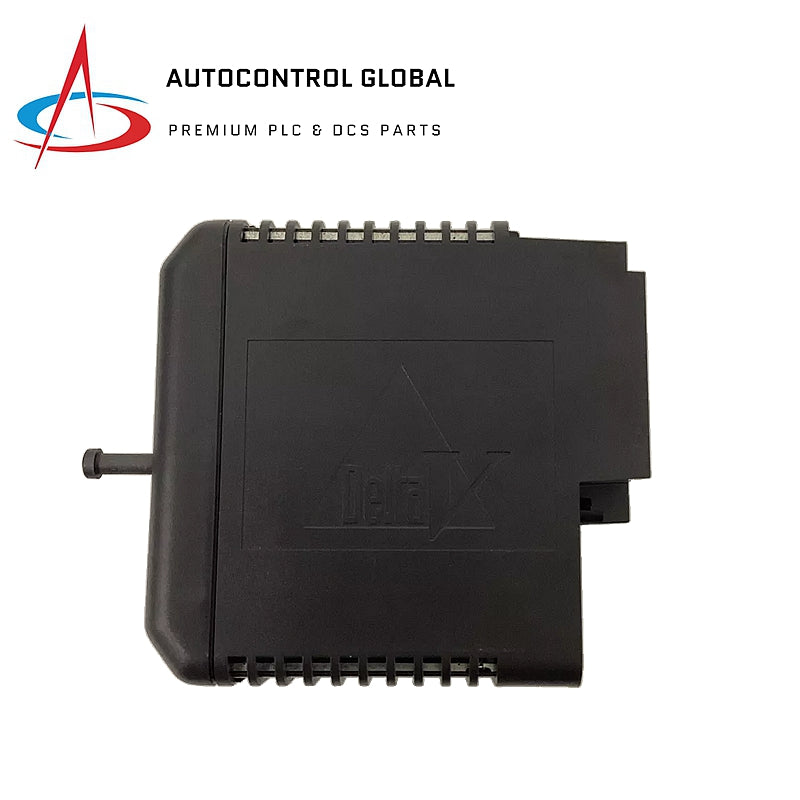
Emerson KJ3001X1-BB1 DeltaV Digital Input Card
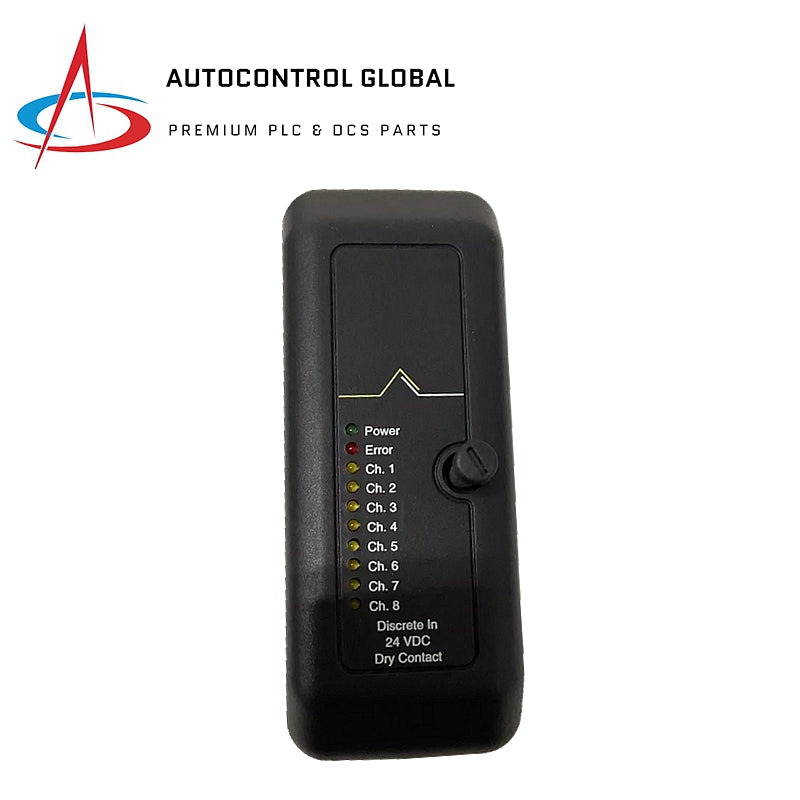
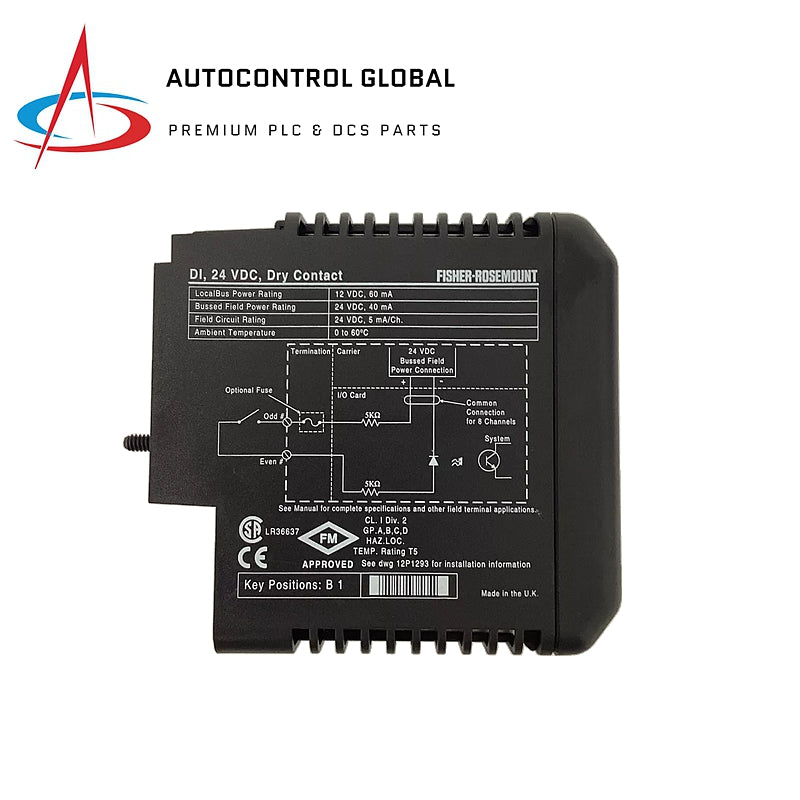
The Emerson KJ3001X1-BB1, also cataloged as the KJ3001X1-BB1 DI 8-Channel 24 VDC Dry Contact Card, operates as a dedicated hardware component for binary signal detection within DeltaV distributed control system networks. The module interfaces directly with unpowered field switches, relay contacts, and discrete sensors to monitor open or closed circuit states. Operating at the distributed I/O layer, the card isolates external circuit loop energy from the internal local bus, digitizing discrete process state changes and outputting formatted data packets to upstream logic controllers.
Hardware Specifications
| Parameter | Specification |
|---|---|
| Model | KJ3001X1-BB1 |
| Brand | Emerson (DeltaV Series) |
| Origin | USA |
| Weight | 0.25 kg |
| Dimensions | Standard DeltaV I/O carrier slot configuration |
| Operating Temp | 0 to 60 deg C |
| Power Consumption | Local Bus Power: 12 VDC at 100 mA |
| Input Channel Density | 8 isolated digital input channels |
| Field Circuit Rating | 24 VDC wet voltage at 5 mA per channel |
| Terminal Block Key Position | B1 |
| Mechanical Shock Resistance | 10g for 11 ms duration |
| Vibration Tolerance | 1 mm peak-to-peak (5 to 16 Hz); 0.5g (16 to 150 Hz) |
| Environmental Protection | IP 20 enclosure rating; ISA-S71.04-1985 Class G3 harsh environment |
| Relative Humidity | 5 to 95% Non-Condensing |
Channel-to-Channel Isolation and Loop Protocol Stability
The KJ3001X1-BB1 incorporates high-density galvanic and optical separation boundaries to guarantee robust channel-to-channel isolation metrics, preventing field-side voltage differentials from introducing logic errors or backplane damage. Each channel injects a regulated 24 VDC current loop rated at 5 mA across external dry contacts to monitor loop continuity. This controlled current limit blocks structural arc faults and attenuates capacitive cross-talk across adjacent signal lines. By dampening voltage spikes and high-frequency noise transients, the hardware preserves the structural balance of the 4-20 mA HART loop protocol lines and parallel field networks routed through the same cabling trays.
Frequently Asked Questions
Q: Can individual channels be reconfigured to accept active wet 24 VDC signals from field devices?
A: No. The internal circuitry of the card is hard-wired to supply its own 24 VDC loop voltage directly to unpowered dry contacts. Interfacing this card with externally powered loops will create short-circuits, trigger overcurrent protection components, and disrupt adjacent channel register reads.
Q: Does the KJ3001X1-BB1 support hot-swapping under live process conditions?
A: Yes. The card assembly is engineered for online hot-swap insertion and extraction on an energized DeltaV I/O carrier. Active logic backplanes isolate the local 12 VDC bus rails during extraction to prevent state disruption or backplane processor halts across neighboring cards.
Q: How is the physical alignment of this card secured when deploying onto the terminal blocks?
A: Mechanical security is enforced through a molded keying system set to terminal block key position B1. This specific mechanical notch alignment prevents the card from locking into terminal bases configured for conflicting signal voltages or analog output configurations.
Field Installation Guidelines
- Align the card module with the keying channels of the terminal block base, ensuring position B1 alignment matches perfectly before applying mechanical force to slide the card into the carrier slots.
- Connect all external dry contact conductors using twisted-pair cables, and ensure the outer cable shields are grounded at the cabinet earth bus bar to suppress ambient electromagnetic fields.
- Maintain strict physical separation between the low-voltage 24 VDC input wiring and three-phase AC power conduits within the field enclosure layout to minimize electromagnetic cross-talk.
- Inspect terminal screws for correct torque loading and ensure ambient environmental levels remain within Class G3 airborne contaminant specifications to prevent oxidation on contact surfaces.